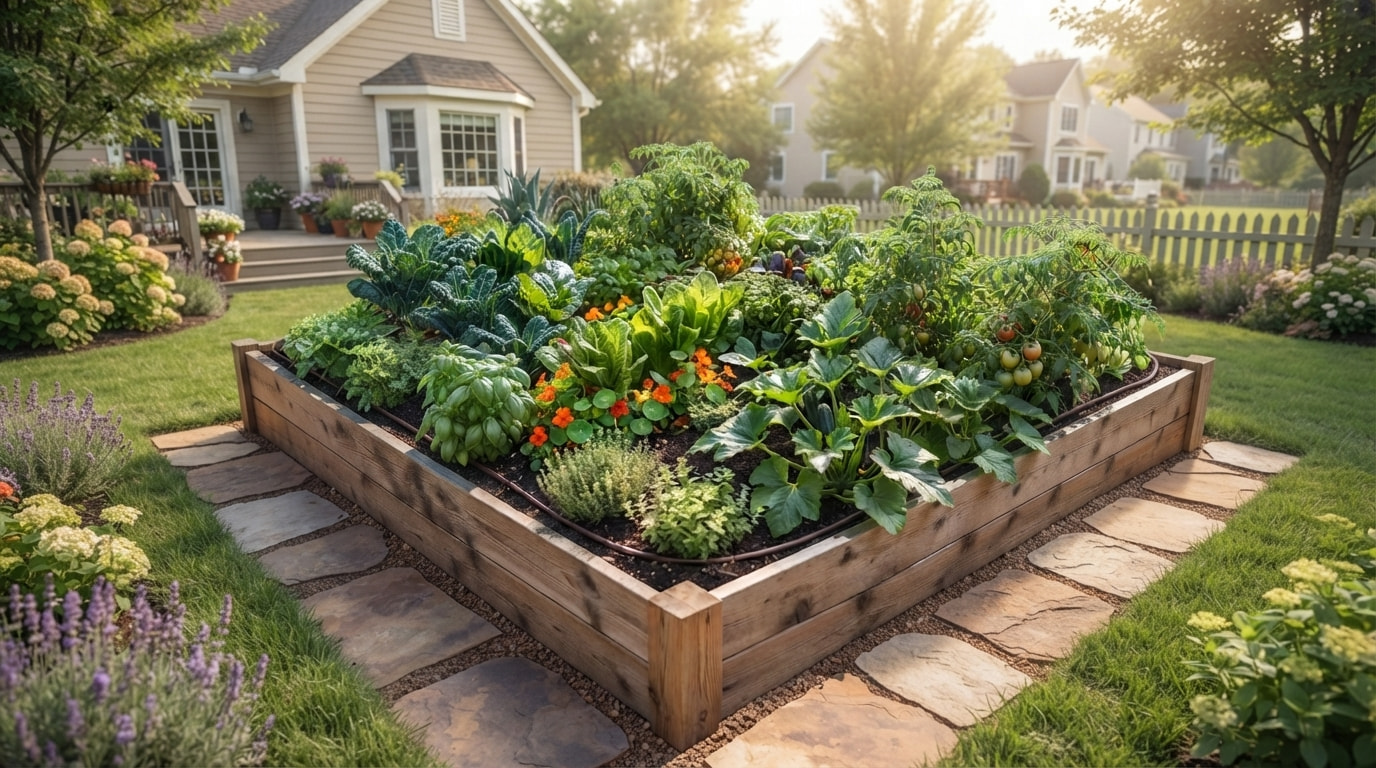
Companion planting for raised beds is one of the fastest ways to turn a brand-new plot of soil into a productive, low-drama vegetable garden. If you just finished building your first raised bed (if you haven’t yet, check out our step-by-step DIY raised bed guide before you plant a single seed), the next decision you make — what goes next to what — matters almost as much as sun, water, and soil quality. Pack the wrong vegetables shoulder-to-shoulder and you’ll fight pests, stunted growth, and competition for nutrients all season. Pair the right ones, and you get natural pest control, better pollination, and higher yields from the exact same square footage.
This guide breaks down companion planting for raised beds in plain language: which vegetables are best friends, which ones you should never plant side by side, and how to actually lay it all out in a 4×8 or 4×4 bed. We’ll also cover the supplies worth buying versus skipping, and — since a picture is worth a thousand words when you’re trying to visualize a planting grid — exactly what kind of images to use if you’re publishing this on your own site, and where to host them so your page stays fast on both desktop and mobile.
By the end, you’ll have a printable-style reference table, a mistake-avoidance checklist, and a layout you can copy directly into your own raised bed this weekend.
What Is Companion Planting, Exactly?
Companion planting is the practice of growing two or more plant species near each other because of the mutual benefit they provide — one might repel a pest that targets the other, one might fix nitrogen in the soil for a heavy feeder next door, or one might provide shade, structure, or a pollinator boost. It’s not folklore; a lot of it is backed by real horticultural science around pest deterrence, allelopathy (plants releasing chemicals that affect neighboring plants), and root structure compatibility.
In a traditional in-ground garden, bad pairings are annoying but forgivable — there’s usually enough space for problems to stay contained. In a raised bed, everything is compressed into a tight footprint, so companion planting for raised beds isn’t optional advice, it’s damage control. A single bad pairing in a 4×4 bed can shade out, starve, or infect half your harvest.
💡 Pro Tip: Raised beds warm up and drain faster than in-ground soil. That means you can plant many companion pairings 1–2 weeks earlier than the “average last frost” date on your seed packet — but it also means you’ll need to water more consistently, especially with heat-loving pairs like tomatoes and basil.
Why Companion Planting for Raised Beds Works So Well
Raised beds create a controlled environment: better drainage, warmer soil, and (usually) richer, weed-free growing medium than native ground soil. That controlled environment amplifies whatever you plant in it — good pairings perform better than they would in-ground, and bad pairings fail faster.
Three reasons companion planting for raised beds specifically deserves its own strategy:
Limited root room. Raised beds are often only 12–18 inches deep, so aggressive or deep-rooted plants (like tomatoes or pole beans) can outcompete shallow-rooted neighbors (like lettuce or onions) for water and nutrients if they’re not spaced with intention.
Microclimate stacking. Tall plants on the north side of a bed can shade shorter plants — which is a feature for heat-sensitive greens in July, but a bug if you accidentally shade your tomatoes.
Pest concentration. Because raised beds are often closer to the house, patio, or a single garden zone, pest pressure (aphids, cabbage moths, squash bugs) can build up quickly. Companion planting is one of the cheapest, lowest-effort defenses you have.
The Best Vegetable Neighbors for Your Raised Bed
Below is a quick-reference table of the strongest companion planting pairs for raised beds. It’s designed to be short and scannable on a phone screen — save it, screenshot it, or print it and tape it inside your garden shed.
Dill attracts predatory wasps that eat cabbage worms
Corn
Beans, squash, cucumbers
Stalks double as a natural bean trellis
Onions/Garlic
Carrots, lettuce, tomatoes
Strong scent repels most soil and leaf pests
💡 Pro Tip: When in doubt, pair a heavy feeder (tomatoes, corn, squash) with a nitrogen fixer (any bean or pea) and a pest-repelling herb (basil, dill, or marigold). That three-way combo covers almost every raised bed weakness at once.
The Worst Vegetable Neighbors: Pairings to Avoid
Just as important as knowing what to plant together is knowing what to keep apart. These are the classic raised bed mistakes that quietly tank a harvest — not because either plant is bad, but because together they compete, poison, or attract trouble.
Plant
Avoid Planting Near
Why It Fails
Tomatoes
Corn, potatoes, fennel
Shared pests (tomato/corn earworm); fennel stunts most neighbors
Beans
Onions, garlic, chives
Allium family suppresses bean growth
Cucumbers
Potatoes, aromatic herbs (sage)
Potatoes compete for nutrients; strong herbs slow cucumber growth
Broccoli/Cabbage
Tomatoes, strawberries, pole beans
Different nutrient/pH needs create stunted growth on both sides
All share blight susceptibility and compete heavily for potassium
Onions/Garlic
Beans, peas, asparagus
Suppresses growth and nitrogen fixation in legumes
⚠️ Common Mistake: The single most common raised bed mistake is planting tomatoes and potatoes in the same bed because “they’re both nightshades, they must get along.” They’re actually the worst combination — they share the same blight and pest pressure, so if one gets sick, the other usually follows within days. Keep them in separate beds entirely, not just separate corners.
Companion Planting for Raised Beds, By Vegetable
If you already know what you want to grow this season, here’s a deeper breakdown by crop.
Tomatoes: The Raised Bed Centerpiece
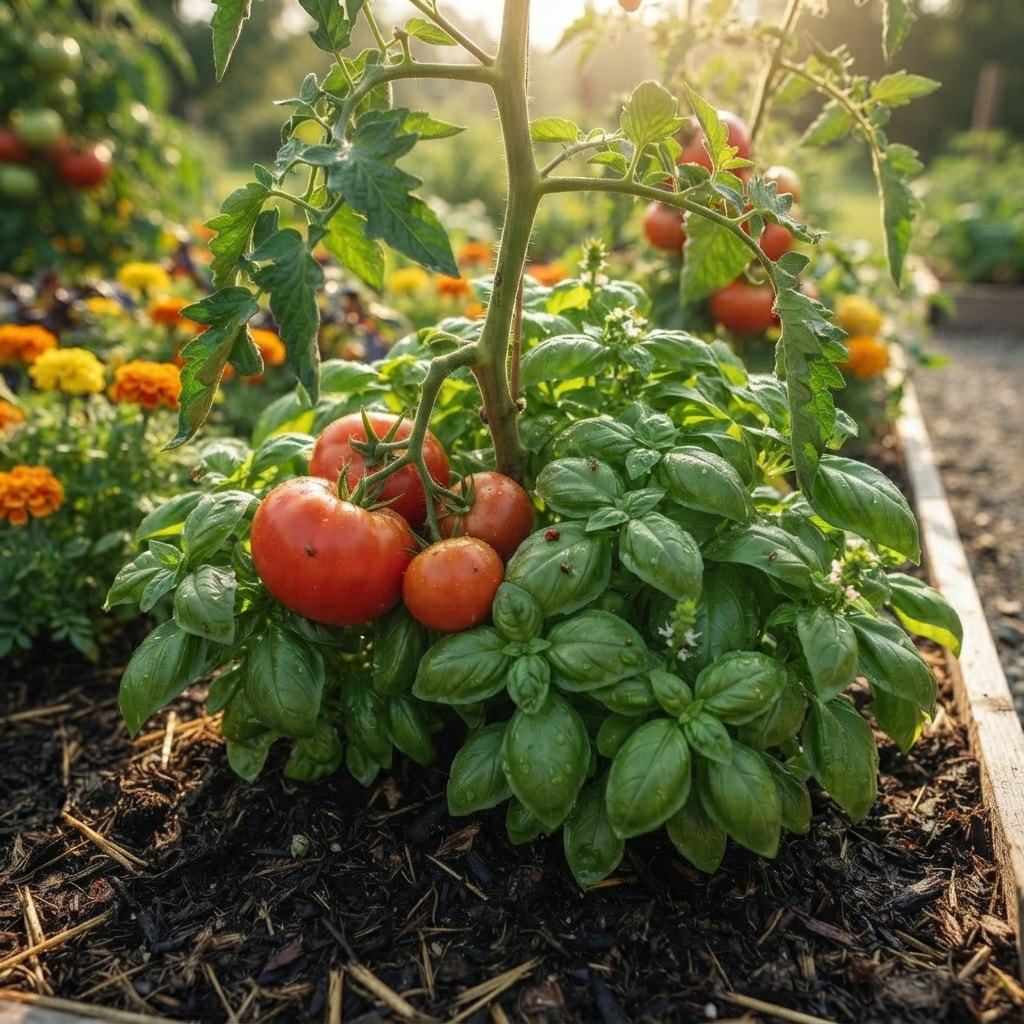
Tomatoes are usually the anchor plant in a raised bed because they need full sun, consistent water, and vertical support. Basil is the single best companion — beyond pest repellence, many gardeners swear it improves tomato flavor. Add marigolds along the border for root-knot nematode control, and tuck carrots underneath since their root systems occupy different soil depths than the tomato’s.
Avoid: corn (shared pest: corn earworm/tomato fruitworm is the same insect), potatoes, and cabbage-family plants (different pH and nutrient competition).
Carrots: The Patient Root Crop
Carrots do best next to onions, leeks, chives, or rosemary — the sulfur compounds in the allium family mask the scent carrot rust flies use to find their host. Lettuce is also a great neighbor since its shallow roots don’t compete with the carrot’s taproot.
Avoid: dill once it matures (it can stunt carrot development) and parsnips (same pest profile, same soil-borne diseases).
Beans: The Nitrogen Factory
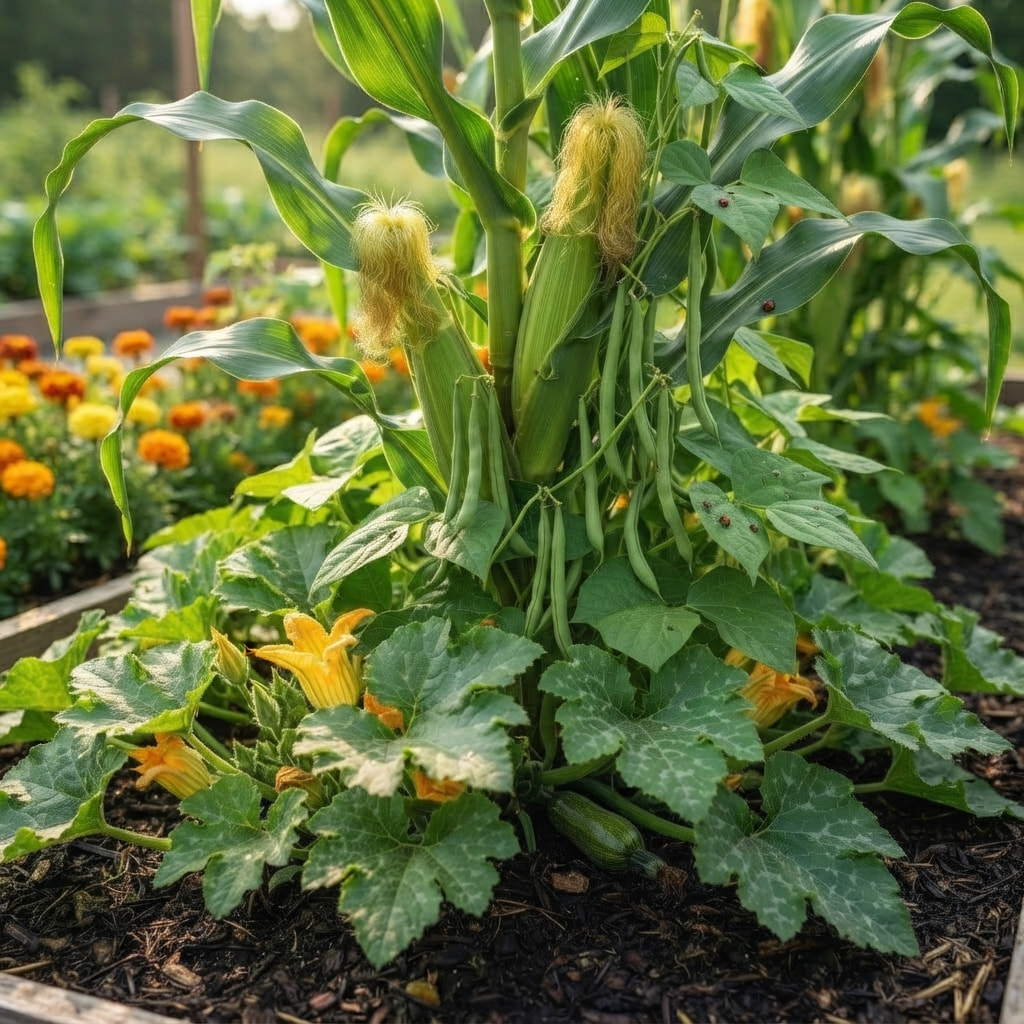
Beans are a “give” plant — their roots fix atmospheric nitrogen into the soil, which benefits heavy feeders planted nearby or in the following season. Corn and squash are the classic “Three Sisters” pairing: corn gives beans something to climb, beans feed the soil, and squash’s broad leaves shade out weeds and retain soil moisture.
Avoid: onions, garlic, and chives, all of which release compounds that inhibit bean growth.
Cucumbers: The Space Hog
Cucumbers sprawl fast, so pairing them with an upright companion like pole beans or corn saves horizontal space. Radishes are an underrated companion here — they act as a trap crop, luring cucumber beetles away from the main plant.
Avoid: potatoes (competing nutrient needs) and strongly aromatic herbs like sage, which can slow cucumber vine growth.
Peppers, Squash, and the Rest
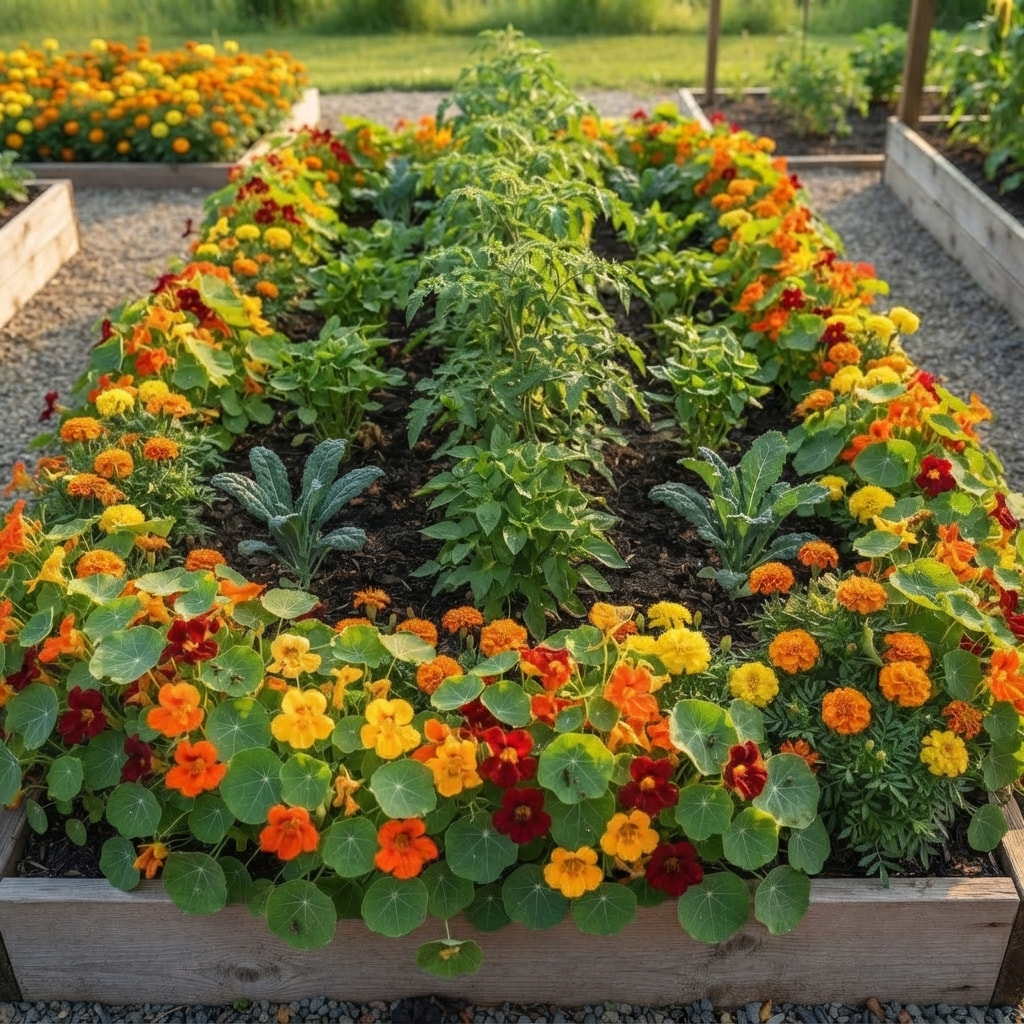
Peppers pair beautifully with basil and onions, both of which help repel aphids and spider mites. Squash and zucchini love nasturtiums, which serve as a sacrificial trap crop for squash bugs — plant a border of nasturtiums and check them daily during peak squash bug season.
How to Lay Out Companion Planting for a Raised Bed
Knowing the pairings is only half the job — the other half is spatial planning. Here’s a simple framework for a standard 4×8 raised bed:
North side (tallest plants): Corn, staked tomatoes, or pole beans on a trellis. This keeps shade off shorter plants as the sun tracks south.
Middle rows (mid-height companions): Peppers, bush beans, squash — paired with their companion herbs (basil, dill) tucked into gaps.
South/border edges (shortest, shade-tolerant): Lettuce, carrots, radishes, onions — these can also tolerate the light dappled shade cast by taller neighbors during peak summer heat.
Corners: Marigolds or nasturtiums — sacrificial and pest-deterrent plants do double duty as border color and pest traps.
💡 Pro Tip: Leave at least 12–18 inches between a trellised plant (pole beans, cucumbers) and its neighbor on the shaded side. Vertical growers cast more shadow than people expect, and a foot of clearance keeps shade-sensitive companions like carrots from bolting early.
⚠️ Common Mistake: Cramming companion plants in too tight because “they’re supposed to help each other.” Companion planting improves outcomes between compatible neighbors — it does not cancel out basic spacing requirements. Always follow the seed packet’s minimum spacing first, then choose companions that fit within that grid.
A Sample 4×4 Raised Bed Layout
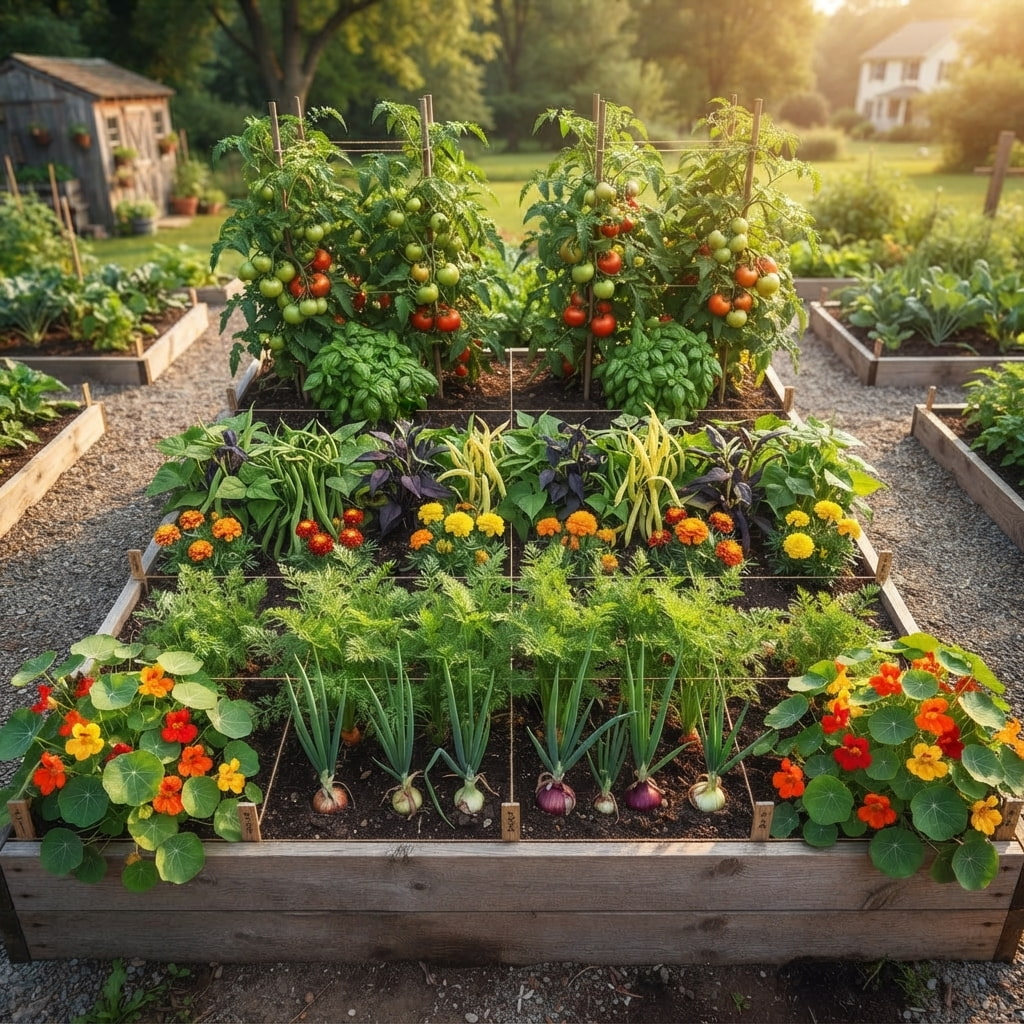
For a smaller 4×4 bed — a common size for first-time raised bed gardeners — here’s a companion-planting-for-raised-beds layout that balances height, sun, and pest control in a compact footprint:
Zone
Plants
Back row (north)
2 staked tomato plants + basil at the base
Middle row
Bush beans + a few marigolds
Front row (south)
Carrots interplanted with onion sets
Border/corners
Nasturtiums (all 4 corners)
This layout keeps the tallest plants from shading anything, uses beans to feed the soil for next season’s tomatoes, and rings the whole bed with a pest-trap border that also looks great from the patio.
Tools and Supplies Worth Having On Hand
A few inexpensive tools make companion planting for raised beds significantly easier to execute and maintain. Below are the categories worth having — swap in your own affiliate links on the bolded product phrases if you’re monetizing this post (see the Amazon Associates section further down for exact anchor text recommendations).
A raised bed soil test kit to check pH and nutrient levels before you plant (tomatoes and brassicas want different pH ranges, and this tells you fast).
Garden plant markers so you don’t forget which seedling is which once everything fills in.
Planting tomatoes and potatoes (or any two nightshades) in the same bed
Ignoring mature plant height when placing tall crops on the south side (they’ll shade everything behind them)
Skipping succession planning — fast growers like radishes and lettuce should be replaced mid-season, not left to bolt in a companion slot
Over-relying on marigolds/nasturtiums as a total pest solution instead of one layer of a broader pest management plan
Planting alliums (onion, garlic) next to beans or peas out of habit, without checking compatibility first
Final Takeaway
Companion planting for raised beds isn’t about memorizing a giant chart — it’s about understanding a few repeatable principles: pair heavy feeders with nitrogen fixers, use aromatic herbs and flowers as natural pest deterrents, keep members of the same disease-prone family apart, and respect mature plant height when deciding what goes where. Start with the pairings in this guide, keep your camera handy to document what works in your specific bed, and adjust next season based on what actually thrived.
If you haven’t finished the bed itself yet, go back and finish building your raised bed first — everything in this guide assumes you’ve already got healthy, well-draining soil to work with.
Frequently Asked Questions
Does companion planting really work, or is it just a gardening myth?
+
Some pairings (like beans fixing nitrogen for heavy feeders, or basil repelling specific tomato pests) are backed by real chemical and ecological mechanisms. Others are more anecdotal. Treat companion planting for raised beds as one useful layer of pest and nutrient management — not a replacement for good spacing, watering, and soil health.
Can I mix flowers into a vegetable raised bed?
+
Yes — marigolds and nasturtiums are two of the most effective companion plants precisely because they’re flowers. They attract pollinators and act as trap crops for pests that would otherwise target your vegetables.
How many different vegetables should I plant in one raised bed?
+
For a 4×4 bed, 4–6 different plant types (plus 1–2 companion herbs/flowers) is usually the sweet spot. More than that and spacing gets too tight to actually realize the companion planting benefits.



Comments (0)