
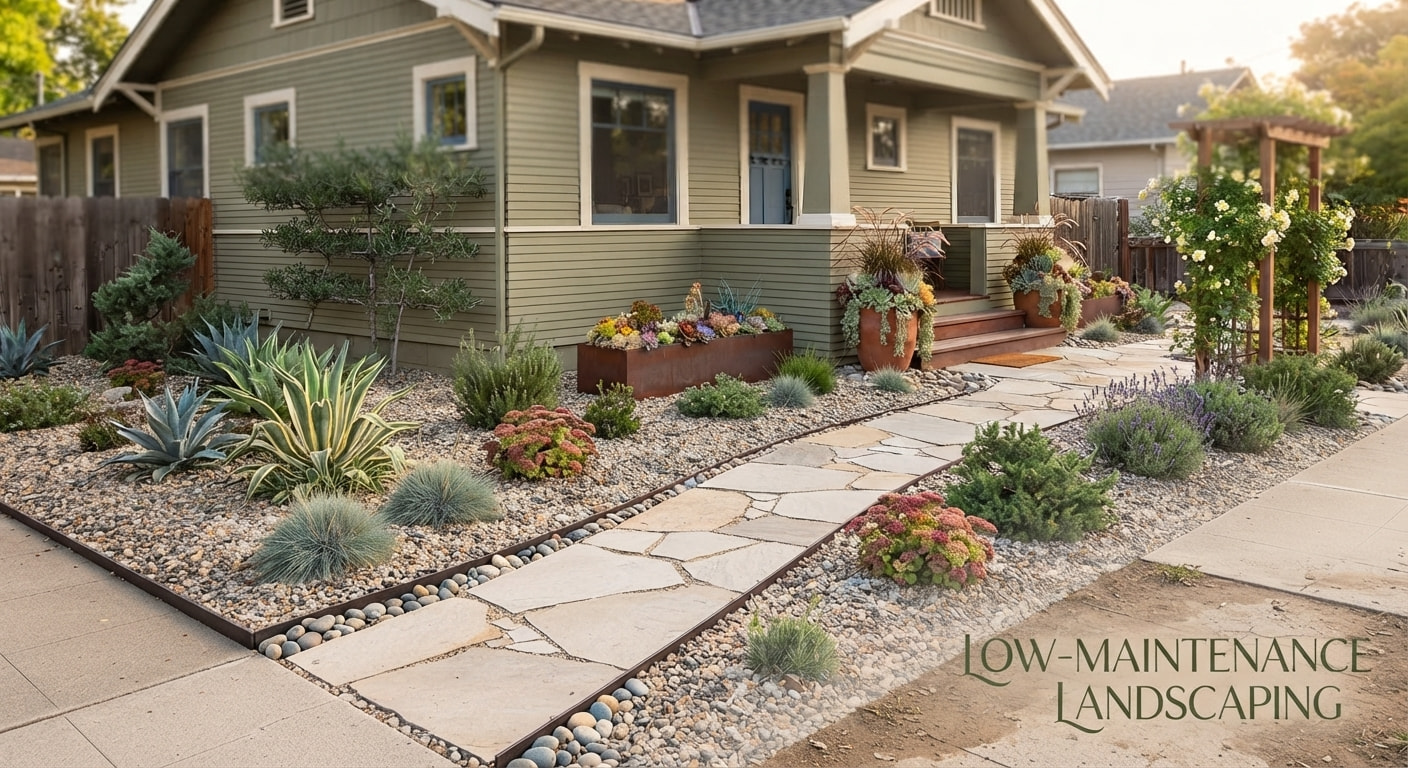
A beautiful front yard doesn’t have to mean hours of weekend weeding, a sky-high water bill, or a landscaper’s invoice that makes you wince. Some of the most eye-catching yards in any neighborhood are also the easiest to maintain — they just rely on smart plant choices, simple hardscaping, and a design that works with your climate instead of against it.
This guide walks through practical, budget-friendly ways to boost your curb appeal while cutting down on the mowing, watering, and upkeep that traditional lawns demand. Whether you’re working with a shady postage-stamp yard or a sun-baked strip along the driveway, there’s a low-maintenance approach that fits.
Why Low-Maintenance Landscaping Is a Smart Investment
Traditional lawns are expensive in ways that aren’t always obvious upfront. Between weekly mowing, fertilizer, weed control, and irrigation, an average lawn can quietly consume more time and money over a few years than a one-time landscaping overhaul would cost. Low-maintenance landscaping flips that equation: you spend a bit more thought (and sometimes a modest amount of money) upfront, and then spend far less on ongoing care.
There’s also a real estate argument here. Curb appeal is one of the most cited factors in a home’s perceived value, and a tidy, well-designed front yard signals that the rest of the property is cared for too. Buyers and neighbors alike tend to respond well to intentional design — defined beds, clean edges, and cohesive plant choices — even when the plant list itself is modest.
Beyond aesthetics and resale value, low-maintenance landscaping is also a practical response to increasingly common water restrictions and unpredictable weather. Drought-tolerant and native plant choices are more resilient to heat waves, irregular rainfall, and the general unpredictability many regions are seeing, which means less replanting and less stress for you as the homeowner.
There’s a mindset shift worth making early on, too. Traditional landscaping often treats a yard as something to be tightly controlled — trimmed, watered, and fertilized into submission. Low-maintenance landscaping works better when you instead think of it as choosing the right plant for the right spot, then letting it do what it naturally does. That single shift in approach is often what separates a yard that looks effortless from one that constantly feels like it’s fighting against itself.
💡 Pro Tip: Before ripping anything out, take photos of your front yard from the street at different times of day. This helps you spot sun and shade patterns you might not notice day-to-day, and gives you a “before” reference to measure your progress against.

Planning Your Low-Maintenance Front Yard (Before You Buy Anything)
The biggest budget-killer in landscaping isn’t the plants themselves — it’s buying the wrong plants for your conditions and having to replace them. A little planning upfront saves real money down the line.
Assess Your Yard’s Sun, Soil, and Drainage
Spend a day (or a few days) observing how much direct sunlight different parts of your yard receive. Areas near the house are often shadier than open lawn space, and this changes dramatically depending on which direction your front yard faces. South- and west-facing yards tend to get more intense afternoon sun, while north-facing yards stay shadier and cooler most of the day.
Soil matters just as much. Dig a small hole about a foot deep in a few spots and note the texture: sandy soil drains quickly and dries out fast, clay soil holds water (sometimes too well, leading to root rot), and loamy soil sits comfortably in between. You don’t need a lab test to get a useful read — a simple squeeze test (does the soil hold its shape or crumble apart?) tells you a lot.
Drainage is worth checking too, especially if you’ve noticed puddles lingering after rain. Low spots that stay soggy will kill most drought-tolerant plants quickly, so either plan to regrade slightly, add a dry creek bed feature, or choose moisture-tolerant plants specifically for that zone.
Set a Realistic Budget
Low-maintenance doesn’t automatically mean low-cost to install — some hardscaping materials (pavers, retaining walls) can be pricey. The good news is that a genuinely budget-friendly low-maintenance yard is absolutely achievable if you prioritize correctly.
| Budget Tier | Typical Approach | Rough Cost Range (Small Yard) |
|---|---|---|
| Shoestring | DIY mulch beds, transplanted/divided perennials, gravel pathway | $150–$500 |
| Moderate | Mix of purchased perennials, mulch, simple edging, a few shrubs | $500–$1,500 |
| Higher-End DIY | Hardscaping (pavers/stepping stones), irrigation upgrades, larger shrubs/trees | $1,500–$4,000+ |
(Costs vary significantly by region and yard size — treat this as a rough planning guide, not a quote.)
⚠️ Common Mistake: Buying all your plants in one trip based on what “looks good” at the garden center. Plants that thrive in a nursery’s controlled greenhouse conditions may struggle in your yard’s actual sun, soil, and climate. Always cross-reference plant tags against your yard’s specific conditions before buying.
Ground Cover Alternatives to Grass
Traditional turf grass is one of the highest-maintenance elements of a typical yard — it needs regular mowing, frequent watering, and ongoing fertilization to look good. Replacing all or part of your lawn with lower-maintenance ground cover is one of the single biggest curb-appeal-per-effort upgrades available.
Ornamental Grasses
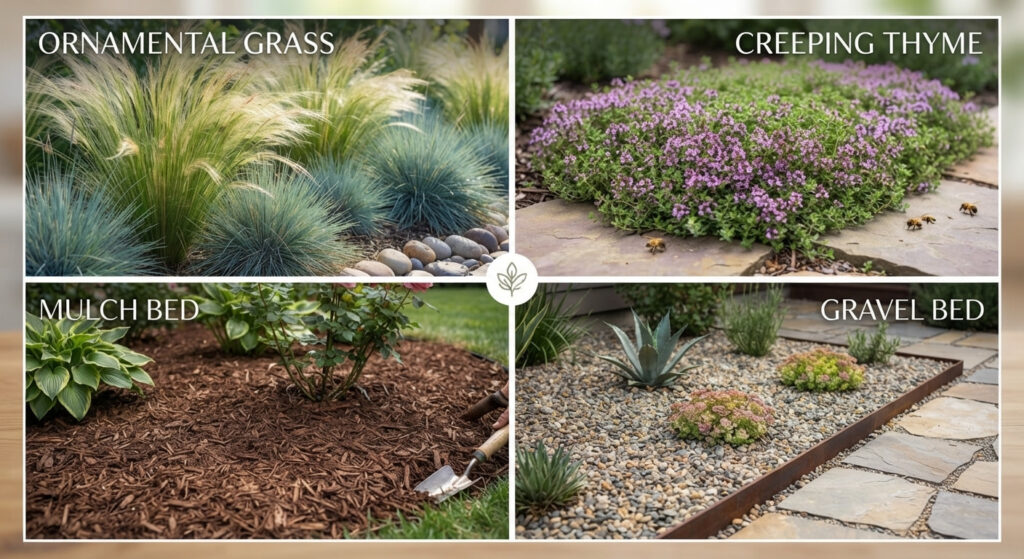
Ornamental grasses like fountain grass, blue fescue, or feather reed grass add movement and texture without the mowing. Most varieties are drought-tolerant once established, need minimal fertilizing, and only require a single cutback in late winter or early spring rather than weekly maintenance.
Creeping Groundcovers
Low, spreading plants like creeping thyme, sedum, or clover fill in bare soil, choke out weeds naturally, and tolerate light foot traffic in many cases. These work especially well along pathway edges or in patches too awkward to mow easily.
Mulch and Gravel Beds
Sometimes the lowest-maintenance “ground cover” isn’t a plant at all. Mulch beds and decorative gravel suppress weeds, retain soil moisture, and give planted areas a finished, intentional look — all with essentially zero ongoing care beyond an occasional top-up.
| Ground Cover Option | Maintenance Level | Best For |
|---|---|---|
| Ornamental grasses | Low | Adding height, movement, and texture |
| Creeping thyme / sedum | Very low | Filling gaps, pathway borders |
| Clover lawn | Low | Full lawn replacement, pollinator-friendly |
| Mulch beds | Very low | Around shrubs, trees, and garden edges |
| Decorative gravel | Very low | Pathways, dry zones, modern aesthetic |
Budget-Friendly Hardscaping Ideas
Hardscaping — the non-living structural elements of your yard — adds definition and curb appeal without ongoing maintenance demands. A little hardscaping goes a long way toward making a yard look designed rather than simply “planted.”
Gravel or Mulch Pathways
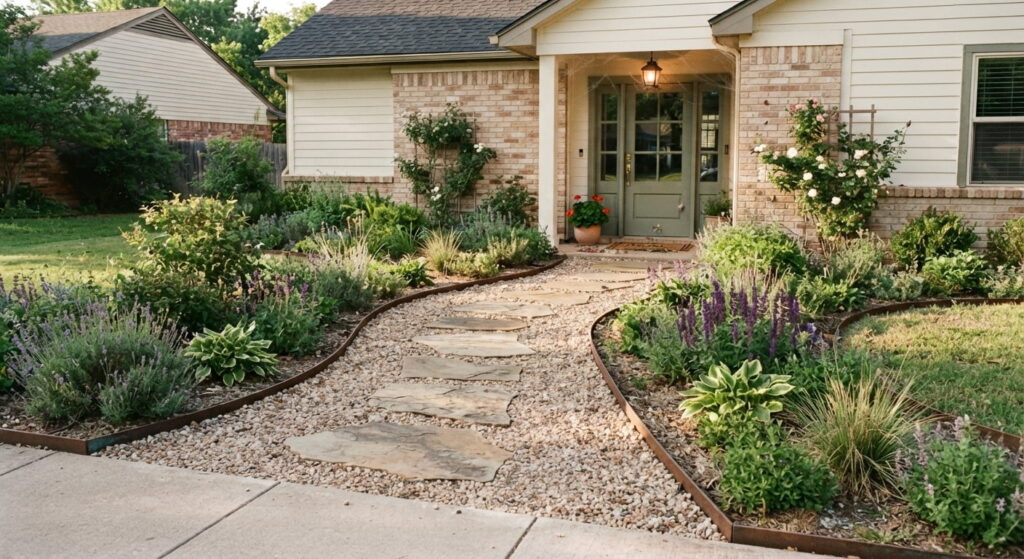
A defined path from the sidewalk to your front door instantly makes a yard feel intentional. decorative gravel or a simple mulch path bordered with edging is one of the cheapest hardscaping upgrades available, and it requires essentially no maintenance beyond an occasional refresh.
Stepping Stones
stepping stones create a similar effect with a slightly more polished look, and they pair especially well with ground cover planted in the gaps between stones for a soft, cottage-garden feel.
Simple Edging
garden edging — whether metal, plastic, or stone — is an inexpensive way to create crisp, clean lines between beds, pathways, and lawn areas. Edging does double duty: it looks tidy year-round, and it physically blocks grass and weeds from creeping into your planted beds, cutting down on maintenance significantly.
💡 Pro Tip: Install edging slightly below ground level (about an inch) so mowers can pass smoothly over the top without catching, and so it doesn’t become a tripping hazard over time.
Low-Maintenance Plant Choices for Curb Appeal
The right plant palette is the backbone of any low-maintenance yard. The goal isn’t to avoid plants altogether — it’s choosing ones that thrive with minimal intervention once established.
Perennials That Come Back Every Year
Unlike annuals, which need to be replanted every single year, perennials return on their own season after season, making them far more cost-effective and time-efficient long-term. Popular low-maintenance perennials include coneflowers, black-eyed Susans, daylilies, and hostas (for shadier spots), most of which tolerate a range of soil conditions and need minimal deadheading to keep blooming.
Native Plants and Drought-Tolerant Shrubs
Native plants are, almost by definition, the lowest-maintenance option available, since they’ve evolved specifically to handle your region’s rainfall, soil, and temperature swings without extra help. drought-tolerant plant fertilizer or a relevant native-plant starter kit if available can give new plantings a boost during their first season while their root systems establish, after which most native shrubs need little more than an occasional deep watering during extended dry spells.
Container Gardening for Instant Color
For yards with poor soil, rented properties, or anyone wanting flexibility, outdoor planters offer an easy way to add seasonal color near the entryway without committing to in-ground planting. Choose self-watering containers if you tend to forget watering schedules — they hold a reservoir of water that plants draw from as needed, cutting down on the guesswork.
| Plant Type | Sun Needs | Water Needs | Notes |
|---|---|---|---|
| Coneflower (Echinacea) | Full sun | Low once established | Attracts pollinators |
| Black-eyed Susan | Full sun | Low | Long summer-to-fall bloom |
| Daylily | Full sun/part shade | Low–moderate | Extremely hardy, spreads well |
| Hosta | Shade/part shade | Moderate | Great for shady front porches |
| Sedum | Full sun | Very low | Drought-tolerant, great filler |
| Lavender | Full sun | Low | Fragrant, deer-resistant |
Smart Design Tricks That Boost Curb Appeal Instantly
Sometimes the biggest visual impact comes from design choices rather than new plants entirely.
Adding Mulch Beds Around Existing Plants
Simply defining clean, mulched beds around plants you already have — rather than letting them sit in bare or patchy soil — instantly makes a yard look more polished. mulch also suppresses weeds and retains moisture, meaning less watering and weeding overall.
Fresh Paint and Simple Lighting
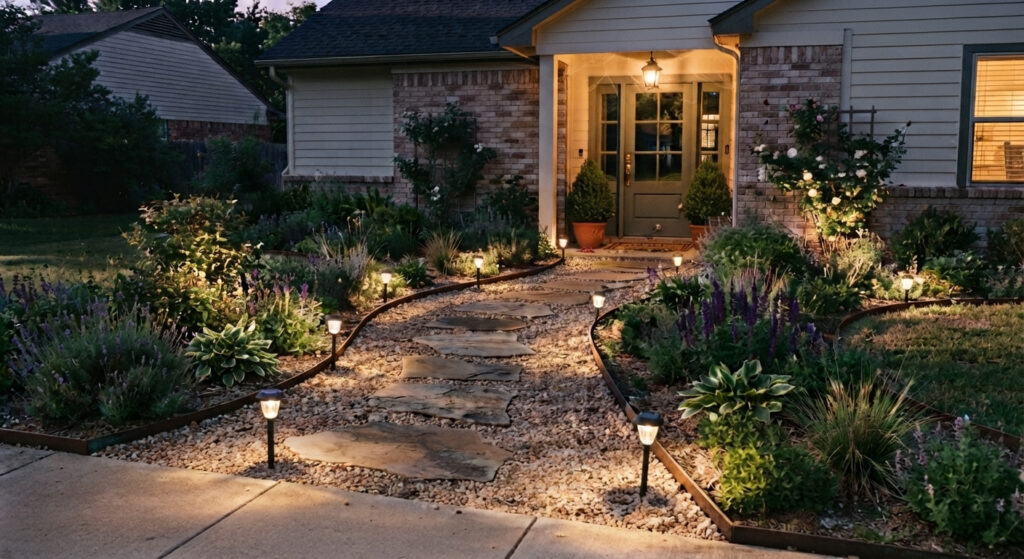
A freshly painted front door or house numbers, paired with solar pathway lights along a walkway, can transform how a yard reads from the street — often for less money than a single new shrub. Solar lighting in particular requires zero wiring and virtually no maintenance beyond an occasional wipe-down of the panels.
Symmetry and Repetition
Repeating the same 2–3 plant varieties in a pattern (rather than one of everything) tends to read as intentional and designed, even in a small space. Symmetrical planting on either side of a front door or walkway is a classic, low-effort trick that instantly elevates curb appeal without adding maintenance.
💡 Pro Tip: Stick to a limited color palette — 2 to 3 main colors — across your front yard plantings. A cohesive palette looks far more polished than a rainbow of unrelated colors, and it’s genuinely easier to plan and maintain.
DIY vs. Hiring a Landscaper: What Makes Sense on a Budget
Many low-maintenance upgrades — mulching, planting perennials, laying a gravel path, installing edging — are entirely manageable as weekend DIY projects, even for beginners. These tasks mostly require patience and a few basic tools rather than specialized skills.
Where hiring a professional starts to make more sense is with larger structural work: regrading a yard with drainage issues, installing a retaining wall, or removing large trees or stumps. These jobs carry real risk of costly mistakes (or physical injury) if done without experience, and the cost of a professional is often justified by avoiding a redo.
A reasonable middle-ground approach many homeowners use is hiring a professional for a single consultation — some landscapers offer paid design sessions without requiring you to hire them for the full installation — and then handling the actual planting and mulching yourself using their plan.
It’s also worth factoring in your own timeline and tolerance for trial and error. DIY landscaping saves money, but it usually costs time, and mistakes along the way (a plant in the wrong spot, a path that doesn’t quite line up) are part of the learning process. If you’re working with a tight deadline — say, listing your home for sale soon — paying for professional installation on at least the most visible, high-impact areas can be worth the added cost, while you handle smaller DIY touches elsewhere in the yard on your own schedule.
| Task | DIY-Friendly? | Notes |
|---|---|---|
| Mulching beds | Yes | Simple, low-risk, big visual impact |
| Planting perennials | Yes | Just follow spacing/sun guidelines |
| Installing edging | Yes | A few hours with basic tools |
| Laying a gravel path | Yes | More labor-intensive but doable |
| Grading for drainage | Consider a pro | Mistakes are costly to fix |
| Retaining walls | Consider a pro | Structural safety concerns |
| Large tree removal | Hire a pro | Safety risk, often requires equipment |
Seasonal Maintenance Checklist for a Low-Effort Yard
Even the lowest-maintenance yard benefits from a small amount of seasonal attention. Here’s a general rhythm to keep things looking their best without turning into a weekly chore.
Spring: Cut back ornamental grasses before new growth starts, refresh mulch layers, and divide overcrowded perennials if needed.
Summer: Deep-water new plantings during dry spells, deadhead spent blooms occasionally to encourage reblooming, and spot-check for weeds before they establish.
Fall: Add a fresh layer of mulch before the first frost to insulate roots, plant spring-blooming bulbs, and clear fallen leaves from pathways.
Winter: Minimal work required for most low-maintenance designs — mainly checking that mulch hasn’t washed away and that pathway lighting is still functioning.
If you live somewhere with heavy snow or hard freezes, winter is also a good time to double-check that any container plants are either brought in, moved to a sheltered spot, or swapped for cold-hardy varieties rated for your zone, since terra cotta and some ceramic pots can crack in freeze-thaw cycles even when the plants inside are perfectly fine.
💡 Pro Tip: Set a recurring reminder on your phone for the start of each season rather than relying on memory. A 20-minute seasonal check-in is usually all a well-designed low-maintenance yard needs to stay looking sharp.
Common Mistakes to Avoid
Even well-intentioned low-maintenance projects can go sideways without a bit of foresight. Here are the most frequent pitfalls homeowners run into.
⚠️ Common Mistakes :
- Skipping landscape fabric or a weed barrier under gravel or mulch beds. Without it, weeds will push through within a season or two, undoing much of the low-maintenance benefit you were going for.
- Overcrowding new plants for instant fullness. Most perennials and shrubs need room to mature — planting too densely leads to competition for water and nutrients, and often more maintenance (thinning, pruning) down the line, not less.
- Ignoring mature plant size at purchase. A small shrub in a nursery pot can triple in size within a few years. Always check the “mature size” on the plant tag and space accordingly, even if the bed looks sparse at first.
- Choosing plants based on looks alone rather than your specific sun, soil, and climate conditions. This is the single most common reason new landscaping fails or requires far more upkeep than expected.
Conclusion
A low-maintenance front yard isn’t about doing less — it’s about being intentional with the effort you do put in, so the results last with minimal upkeep. By assessing your yard’s real conditions, choosing plants suited to your climate, leaning on hardscaping and ground covers where it makes sense, and avoiding a few common pitfalls, you can build genuine curb appeal on a modest budget.
Start with one section of the yard rather than overhauling everything at once. A single well-executed bed, path, or planting area can transform how your whole property reads from the street, and it gives you room to learn what works in your specific space before committing further time and money. Over a season or two, these small, deliberate changes add up to a yard that looks great year-round — without owning your weekends.
Frequently Asked Questions
Replacing high-traffic or hard-to-mow sections of grass with mulch beds, gravel, or drought-tolerant ground cover is typically the most budget-friendly place to start. It requires no ongoing mowing or fertilizing and can often be done gradually, section by section, as your budget allows.
Most perennials and shrubs take one to three growing seasons to fill in and reach a mature, polished look. Ground covers like creeping thyme or clover tend to establish faster, often filling in noticeably within a single season under the right conditions.
Not necessarily. Many drought-tolerant and native plants only need supplemental watering during their first season while establishing roots. After that, most can survive on rainfall alone in temperate climates, though a simple soaker hose or drip line can help during extended dry spells without much added maintenance.
Yes, especially using container gardening. Planters filled with perennials or drought-tolerant plants can be moved if you relocate, and simple additions like mulch, gravel, or solar lighting are typically low-commitment enough that landlords are comfortable with them (though it’s always worth checking your lease first).
Clover lawns and creeping thyme tend to hold up reasonably well to light foot traffic and are generally considered safe for pets, unlike some ornamental groundcovers. For heavier play areas, keeping a small patch of traditional grass while converting the rest of the yard is a common compromise.
Look for plants labeled as “native” or “drought-tolerant” specifically for your USDA hardiness zone or regional climate, rather than relying on general labels alone. Local nurseries and extension offices are often the most reliable source for what genuinely thrives with minimal care in your specific area, since national big-box labeling can be inconsistent.
Comments (0)